
The best container transaction follows the calendar. A business with a permanent storage shortage is solving a different problem than a contractor needing secure space for six months. Compare buying a shipping container, rental and lease terms around the full project—not only the purchase price or monthly rate.
Need purchase and rental options?
Share the business use, expected term, size and delivery ZIP to compare practical paths.
Buy, rent or lease at a glance
| Path | Often fits | Questions to ask |
|---|---|---|
| Buy | Long-term storage, repeat use, approved modifications | Delivered cost, condition, resale, site permanence |
| Rent | Projects with a defined temporary term | Minimum term, delivery, pickup, damage and extension rate |
| Lease | Businesses preserving capital or needing structured longer terms | Total term cost, renewal, maintenance and end-of-term handling |
Buying favors control and long use
Ownership is easier to justify when the container will remain for years, move between company sites or receive permanent modifications. The business controls the asset and is not paying recurring rent after the original cost is recovered. It also accepts responsibility for repairs, relocation and eventual resale or disposal.
Rental favors temporary certainty
Rental can fit seasonal inventory, renovation, construction and short-term relocation. The useful comparison includes inbound delivery, monthly rate, minimum months, pickup charge, notice period and charges for damage beyond ordinary wear. A low monthly rate with expensive delivery and pickup may lose to a higher rate with better total terms.
Review Harper Steel’s container rental and lease guidance before comparing monthly figures.
Lease structures should be read carefully
“Lease” can describe different arrangements. Confirm whether ownership transfers, whether purchase options exist and how early termination works. The accounting treatment belongs with the business’s financial adviser; the operational question is whether the term matches the expected need.
A representative farm scenario
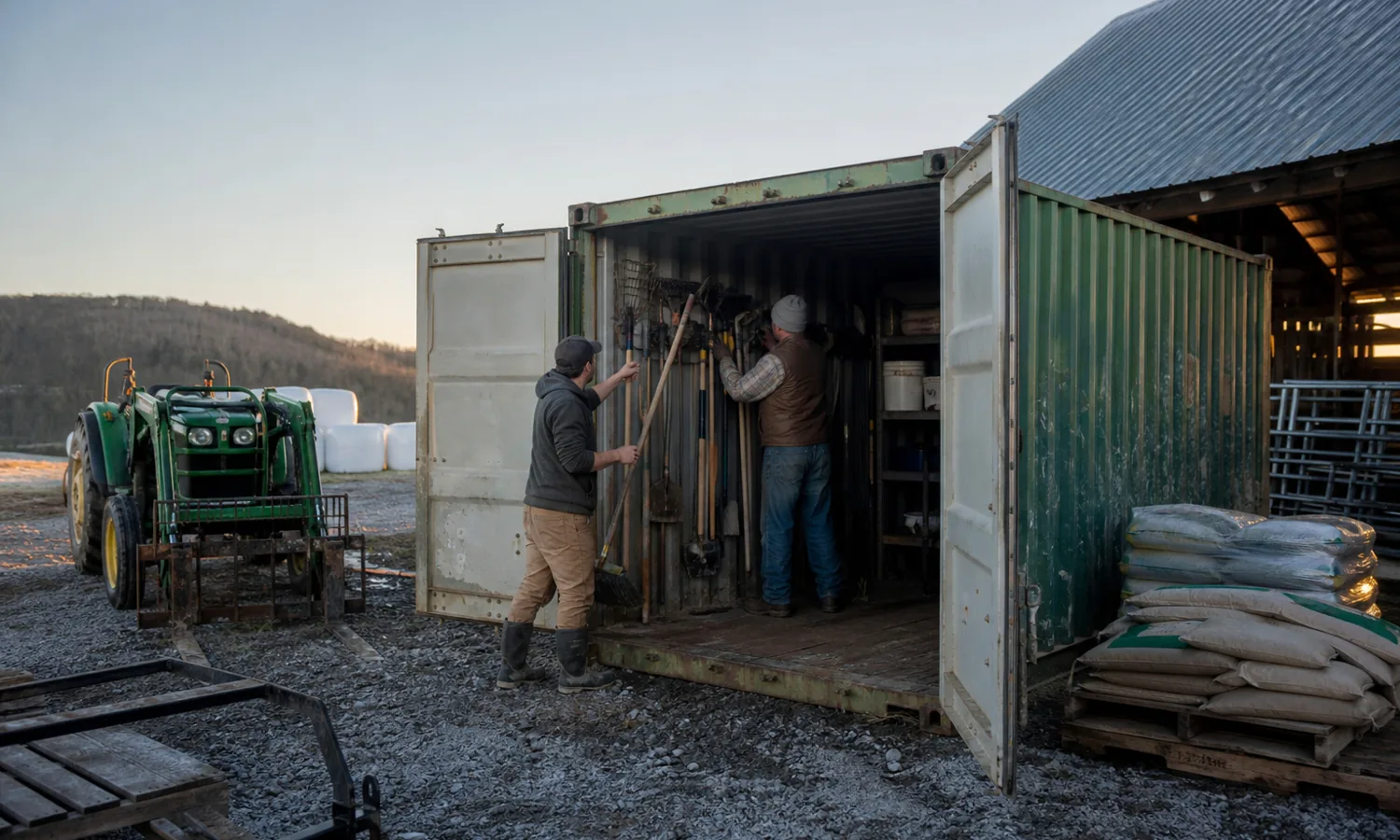
A growing farm may need secure parts and tool storage immediately. Renting can cover the current season while the permanent shop is planned. Buying may make more sense if the container will remain beside the maintenance barn for several years. The decision changes when pickup cost, future relocation and approved shelving are included.
Calculate the project total
For each option, add all known costs through the expected end date. Include delivery, monthly charges, pickup, site preparation, lock hardware, insurance requirements and likely extensions. Then test the plan if the project lasts three months longer than expected. That simple sensitivity check exposes fragile “cheap” options.
Frequently asked questions
How long should I need a container before buying?
There is no universal break-even point. Compare the delivered purchase price with all rental charges for the realistic term, including pickup and extensions.
Can I modify a rented container?
Usually only with written permission. Ownership is generally the better path for permanent doors, windows, electrical systems or structural changes.
Who prepares the site for a rental container?
The customer typically provides safe access and a suitable placement area. Confirm responsibilities in the agreement.
Get the Best Shipping Container Prices for Your Project
Find new, one-trip and used options for your delivery location. Compare complete delivered prices and see where you could save up to 30%.
Get Container Prices