
A shipping container modification quote can look simple—one door, two windows and a few outlets—until structure, weatherproofing, code and site use are considered. Cutting corrugated steel changes how loads travel through the wall. Electrical work needs a defined source and load. Ventilation depends on what the space will contain. The responsible question is not “How much is a window?” but “What complete assembly makes this container safe and useful?”
Begin with the container itself. A clean one-trip unit may be appropriate for a highly visible conversion, while a structurally sound used unit can conserve budget for practical improvements. Compare that tradeoff in the one-trip versus used container guide.
Need a container and a defined modification scope?
Describe the use, size, delivery site and required openings before comparing the complete delivered project.
What changes modification cost?
| Modification | Cost drivers to define |
|---|---|
| Personnel door | Door grade, frame, lockset, threshold, reinforcement and weather sealing |
| Window | Size, glazing, security, flashing, trim and structural framing |
| Electrical | Service size, panel, circuits, fixtures, receptacles, grounding and inspection |
| Ventilation | Passive or powered airflow, contents, heat and moisture load |
| Insulation | Climate, condensation control, wall/ceiling system and interior finish |
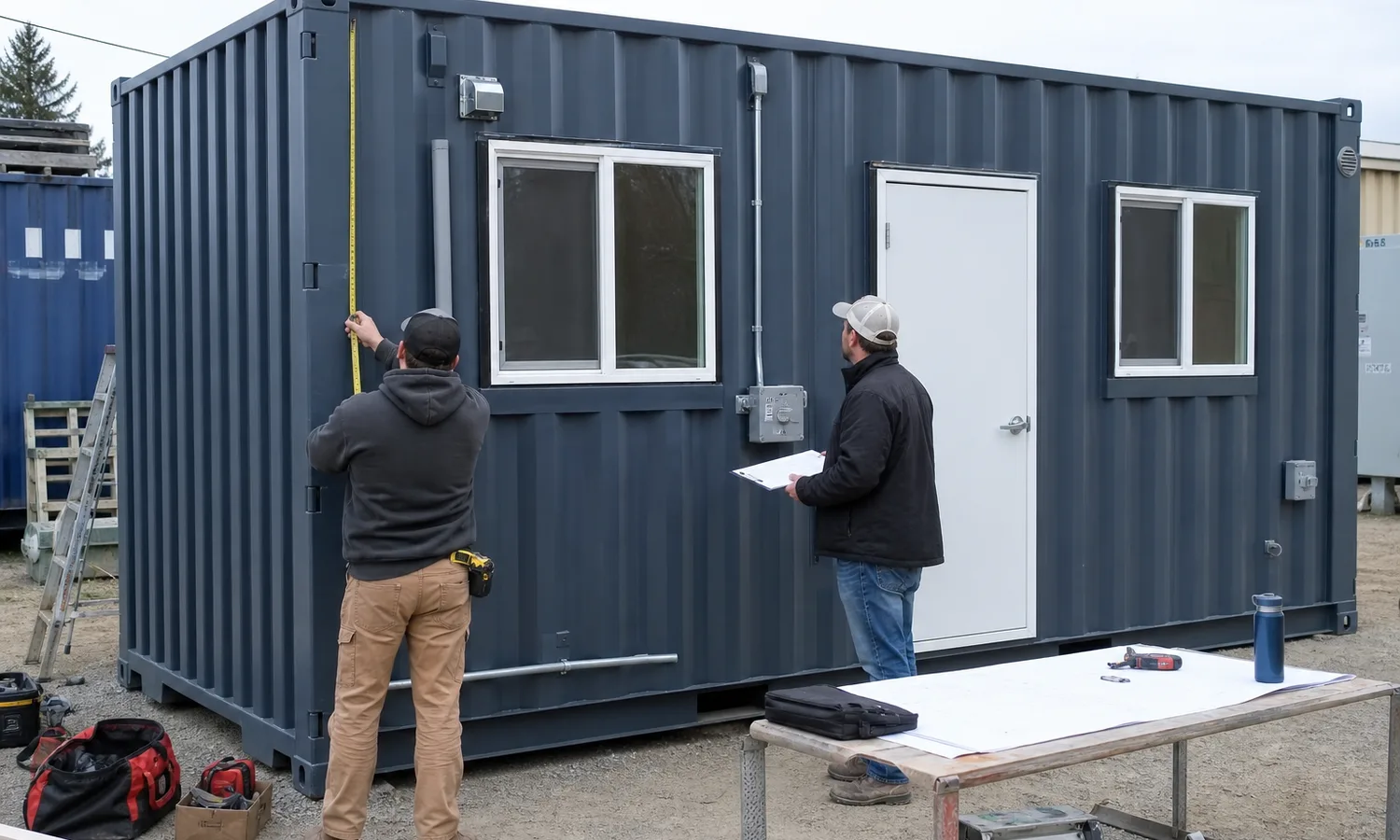
Cut openings only after the layout is settled
A personnel door placed too close to shelving, a window blocked by the delivery orientation or an electrical panel without working clearance becomes an expensive correction. Draw the floor plan at scale. Mark cargo doors, personnel circulation, shelving depth, equipment, service clearances and exterior obstructions. When the container will remain transportable, confirm how modifications affect lifting, handling and future relocation.
Size also affects the plan. A 20-foot modified container concentrates circulation and may need careful door placement. A 40-foot container offers more separation but requires greater delivery clearance and may need additional electrical or lighting coverage.
Electrical pricing starts with the source
Outlets and lights are the visible portion; the power source is the project. Identify available voltage, distance from the source, intended equipment loads, heating or cooling, interior and exterior receptacles, lighting levels, emergency requirements and whether the installation is temporary or permanent. Qualified trades and local inspectors should determine applicable requirements. Avoid buying a generic electrical package before the use and site are known.
Ventilation and insulation solve different problems
Vents exchange air. Insulation slows heat flow. Neither automatically controls humidity. A tool-storage container in a temperate climate has different needs from a staffed workspace or a container holding moisture-sensitive inventory. Condensation control may involve limiting moisture entry, using appropriate ventilation, insulating surfaces and managing indoor conditions. If people will occupy the space, the project moves beyond ordinary storage and should receive professional code, egress, mechanical and life-safety review.
Budget the delivered, installed result
Include the base container, modifications, finish work, transportation, unloading, site preparation, utility connection, permits and inspections. The earlier guide to delivered container cost explains why a low yard price is not the same as a completed project price. Use the container buyer’s guide to keep condition and delivery assumptions consistent across proposals.
Frequently asked questions
Can any contractor cut a door into a container?
The work should be designed and completed by qualified professionals who understand reinforcement, weather sealing and applicable codes.
Do modified containers need permits?
They may, depending on use, duration, location, utilities and local rules. Confirm requirements before fabrication.
Is it cheaper to modify before delivery?
Often it can be more controlled, but the best sequence depends on transport limits, site access, utility work and the modification scope.
Get the Best Shipping Container Prices for Your Project
Find new, one-trip and used options for your delivery location. Compare complete delivered prices and see where you could save up to 30%.
Get Container Prices