
A brewery can run out of practical storage long before it runs out of brewing capacity. Seasonal patio furniture, festival tents, empty kegs, point-of-sale materials, packaged goods and maintenance parts all compete for floor space that is better reserved for production and customer service. A properly selected brewery storage container can separate those slower-moving items from daily work without committing the business to a building addition.
The decision is not simply whether a steel box fits behind the building. Brewery operators should compare container size, condition, access frequency, neighborhood appearance, delivery clearance and the way Minnesota weather will affect what goes inside. Harper Steel’s shipping container buyer’s guide is a useful starting point before comparing a specific size or delivered quote.
Planning storage for a brewery or hospitality business?
Share the intended inventory, site access and delivery ZIP so the container and placement plan fit the operation.
What brewery items belong in a container?
Good candidates are durable items that consume space but do not require constant access: patio chairs and tables, event barricades, taproom décor, packaged promotional materials, empty clean kegs, maintenance supplies and non-temperature-sensitive equipment. Ingredients, chemicals, filled beverage inventory and anything governed by food-safety or temperature requirements need a more careful review. A container is storage space, not automatically a conditioned warehouse.
Start by separating daily, weekly and seasonal access. Daily-use items belong near the doors on labeled shelving. Seasonal furniture can occupy the back. Heavy parts should stay low, with a clear center aisle. If the inventory is modest or access is tight, review the 20-foot shipping container options. A larger event program or multi-location operation may justify the capacity of a 40-foot shipping container, provided the truck can place it.
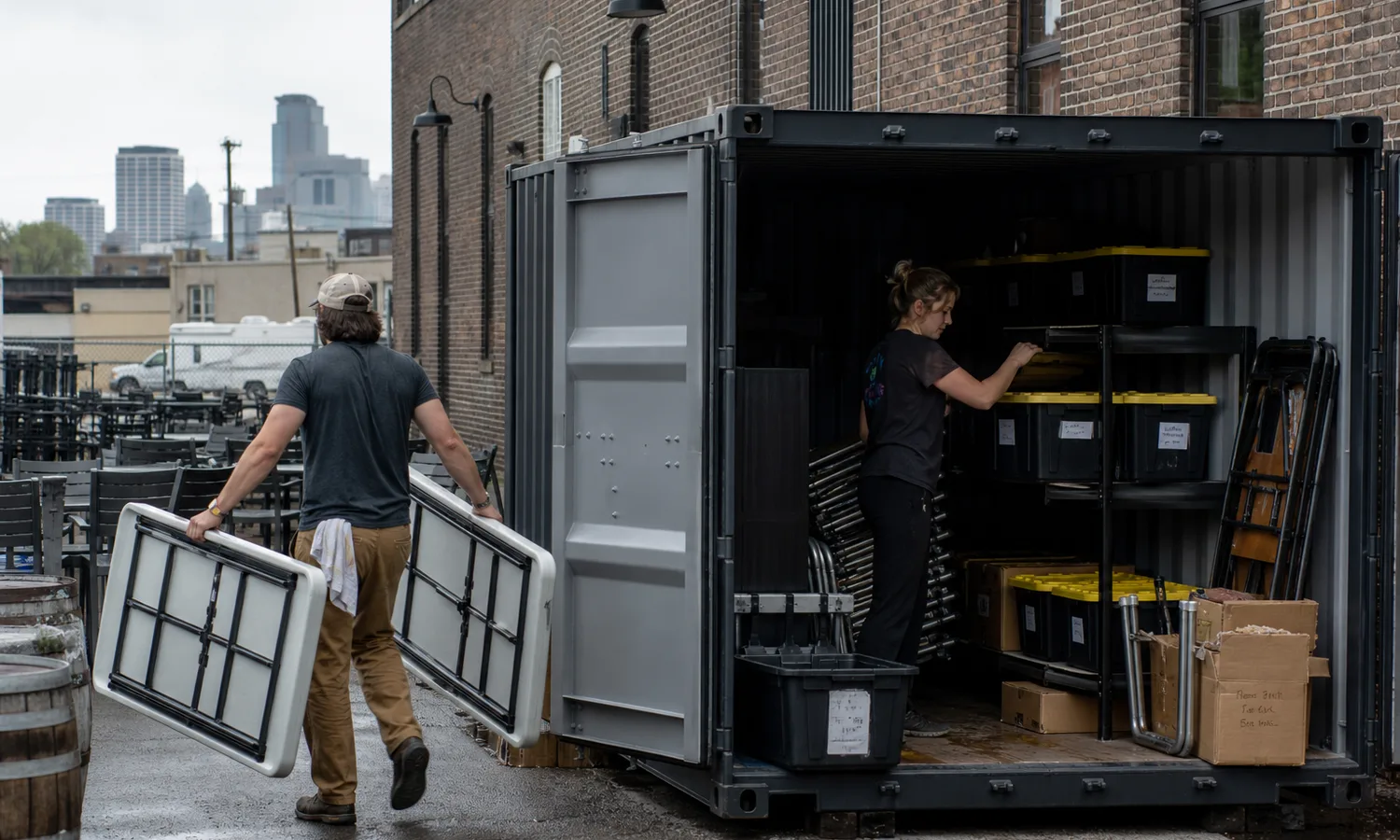
Representative Minneapolis brewery scenario
Consider a representative craft brewery in Minneapolis with a busy taproom and a patio that changes twice a year. The business needs space for folding tables, heaters, festival equipment and packaged-service supplies, but cannot give up production floor area. This is an illustrative operating example, not a claim about a named Harper Steel customer.
The team first considers a 40-foot unit because it offers more capacity. A site walk shows that the alley approach and neighboring loading activity make straight-line placement difficult. A 20-foot container, organized with industrial shelving and a documented seasonal rotation, provides enough usable space and a more realistic delivery path. The lesson for any buyer seeking Minneapolis shipping containers is that truck access can decide the size before storage volume does.
Control moisture, odor and winter access
Cold weather does not damage steel storage by itself, but temperature swings can create condensation when moist air is trapped inside. Keep wet patio furniture out until it dries. Use pallets or shelving rather than placing cartons directly on the floor. Appropriate passive vents may help ordinary storage, while sensitive goods may require insulation, dehumidification or a different building solution. Snow removal must preserve access to the cargo doors and should not bury the container’s lower rails or block drainage.
Buy, rent or lease for seasonal hospitality storage?
Ownership often fits a brewery with a permanent storage shortage and a stable site. Rental can fit a renovation, patio rebuild or temporary event season. Read the container rental and lease guidance, then compare delivery, pickup, minimum term and extension costs—not just the monthly figure. If appearance matters beside a customer-facing property, compare one-trip and used container condition before deciding where the budget belongs.
Frequently asked questions
Can a brewery store full kegs in a shipping container?
Only when the required temperature, handling and applicable beverage-storage rules are satisfied. An ordinary unconditioned container should not be assumed to provide controlled beverage storage.
Does a brewery need a permit for a storage container?
Requirements vary by city, zoning district, duration and placement. Confirm local rules, fire access, property setbacks and landlord approval before ordering.
How should event equipment be organized?
Use labeled zones, stable shelving, a clear aisle and a seasonal loading plan. Store the next items needed closest to the doors.
Get the Best Shipping Container Prices for Your Project
Find new, one-trip and used options for your delivery location. Compare complete delivered prices and see where you could save up to 30%.
Get Container Prices