
The right container is not automatically the largest one that fits the budget. It is the smallest size that handles the load without creating an access, organization or delivery problem. For many buyers, that means a direct comparison between a 20-foot shipping container and a 40-foot shipping container.
Unsure which container size fits?
Describe the inventory, site and delivery ZIP to compare locally available sizes.
20ft versus 40ft at a glance
| Decision | 20-foot container | 40-foot container |
|---|---|---|
| Typical use | Tools, small business stock, residential and compact job sites | Bulk inventory, equipment, long materials and major projects |
| Footprint | About 20 by 8 feet | About 40 by 8 feet |
| Organization | Shorter walking distance; easier to zone | More capacity but needs a shelving and aisle plan |
| Delivery room | Less truck and placement room | Substantially more straight-line room |
| High cube | Availability varies | Common option where added height helps |
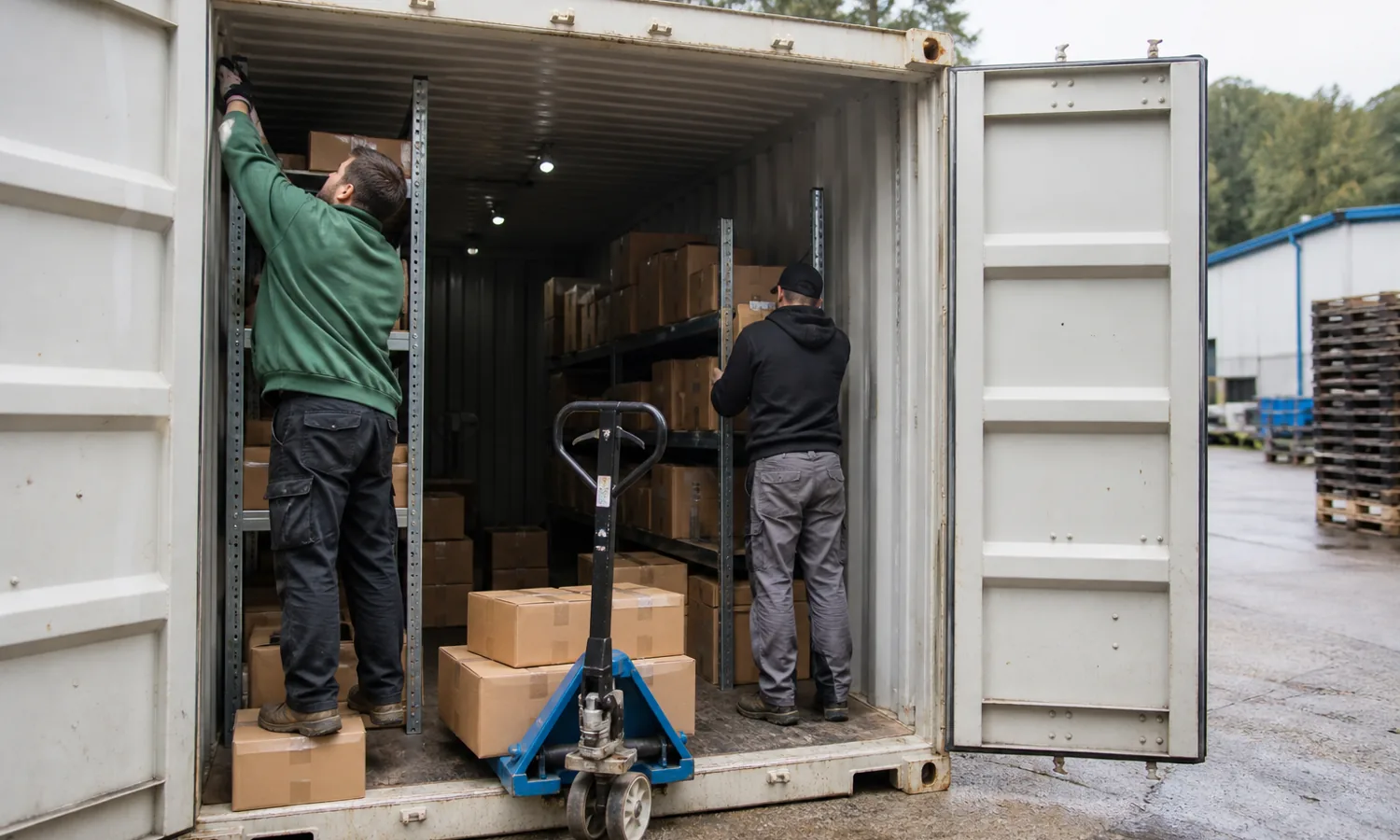
Choose a 20-foot container when access controls the project
A 20-foot unit is often easier to deliver to a smaller commercial property, farm lane or residential site. It can be easier to organize because items are closer to the doors. It is also a sensible fit when the load is dense: tools, machinery parts and liquids can reach weight limits before a larger box is filled.
Use the 20-foot container guide to check dimensions and common applications.
Choose a 40-foot container when volume drives the decision
A 40-foot container provides roughly twice the nominal floor length, but it also doubles the distance from the doors to the back wall. Shelving, lighting and a center aisle matter. Long materials, palletized stock, seasonal goods and equipment fleets often justify the capacity. A high-cube version can improve vertical storage when the site and handling equipment support it.
Review 40-foot container options before assuming the standard height is enough.
Measure the delivery path, not just the pad
The final resting area is only one part of the site. The delivery truck needs a clear approach, enough room to extend or tilt the trailer and a safe path out. Note gates, parked vehicles, soft shoulders, septic areas, wires, tree limbs and slopes. A 40-foot unit may physically fit the pad while the truck cannot place it.
A representative business scenario
Consider a regional parts distributor storing overflow cartons. A 20-foot container may hold the current volume, but poor shelving could waste half the cubic space. A 40-foot unit may cost less per usable foot yet create excess walking and a more difficult delivery. Counting pallet positions, aisle width and expected growth usually makes the answer clearer than comparing exterior dimensions alone.
Frequently asked questions
Is a 40-foot container always better value?
It can offer more space per dollar, but only if the site can receive it and the business will use the capacity.
How much room is needed for delivery?
It depends on truck type and placement direction. Ask the delivery provider to confirm required straight-line and turning clearance.
Should I choose a high-cube container?
High cube helps with tall equipment, shelving and cubic capacity. Confirm exterior height, door height and local availability.
Get the Best Shipping Container Prices for Your Project
Find new, one-trip and used options for your delivery location. Compare complete delivered prices and see where you could save up to 30%.
Get Container Prices